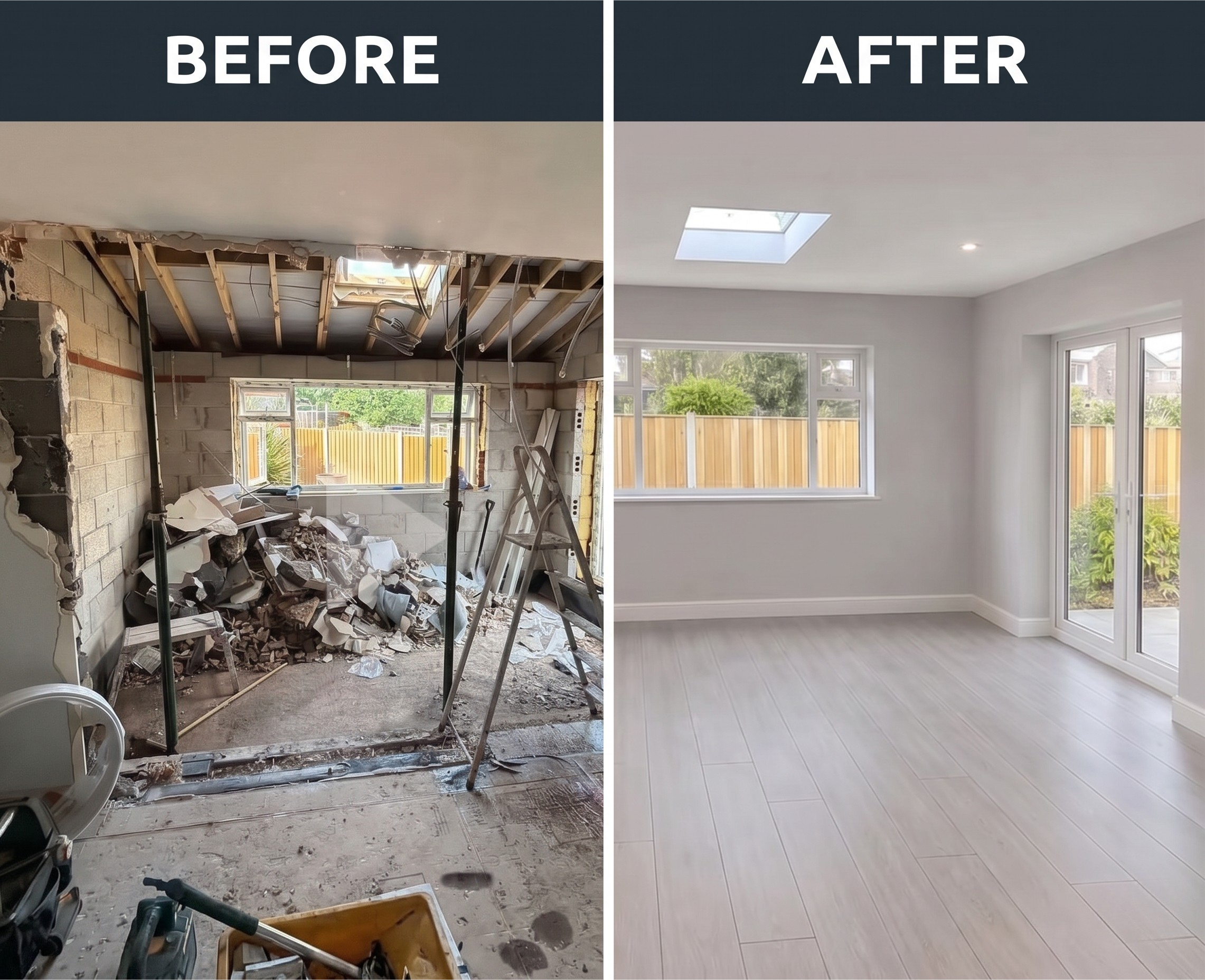
Expand Your Horizon:
The Ultimate Guide to House Back Extensions A house back extension is one of the most transformative home improvement projects you can undertake.By extending into your rear garden space, you don't just add square footage—you completely redefine how your family lives, cooks, and relaxes.Whether you want to build a sprawling open-plan kitchen or seamless indoor-outdoor transition, a rear extension breathes new life into your existing property.Popular Back Extension Styles
1. The Classic Single-Storey Rear ExtensionThe most popular choice for growing families. It typically extends across the full width of your property, opening up the back of your house to create a massive, multi-functional room.Best for: Open-plan kitchen-diners, family living zones, and home offices.
2. The Multi-Storey Back ExtensionIf you have the budget and the footprint, building up as well as out maximizes your investment.Best for: Adding an extra bedroom, a master suite, or an additional bathroom upstairs while gaining living space downstairs.
3. The Wrap-Around ExtensionBy combining a side return extension with a rear extension, you create an L-shaped space that completely transforms the ground floor layout.Best for: Period properties or semi-detached homes with unused side alleyways.Key Benefits of Extending BackwardSeamless Indoor-Outdoor Flow: By incorporating large bi-fold or sliding doors, a rear extension blends your indoor living area perfectly with your garden or patio.Floods of Natural Light: Take advantage of roof lanterns, skylights, and floor-to-ceiling glass to bring daylight deep into the center of your home.Boosts Property Value: A well-designed, high-quality extension typically adds significant market value to your home, often far exceeding the initial build cost.The Smart Alternative to Moving: Avoid the stress, taxes, and fees of moving to a new house. Instead, upgrade the home you already love.Key Planning ConsiderationsBefore breaking ground, it is essential to keep a few technical and structural boxes checked: Pre-Build ChecklistPermitted Development vs. Full Planning: Many single-storey rear extensions fall under "Permitted Development" rights, meaning you might not need full planning permission. However, it's always critical to verify local building regulations and limits.Light and Boundaries: Consider how your extension might impact your neighbors' right to light.Plumbing & Drainage: Extending over existing drains or manholes requires careful architectural planning and potential agreements with local water authorities.